Friday, 17 May 2013

The Mysteries Behind Dan Brown's Inferno

Cover for the Simon and Schuster US edition of Michael Haag's Inferno Decoded. Click on the image to enlarge.
Inferno Decoded, set for publication in Britain on 18 June, is an exploration of the infernal world of Dante and Dan Brown.  Following in the footsteps of Robert Langdon, Harvard professor of symbology, as he tries to decrypt clues from Dante's Divine Comedy, the book joins the chase from Florence to Venice and to Istanbul, and covers everything along the way, from the Black Death to transhumanism, from the Renaissance to esoteric knowledge.

Inferno Decoded examines codes, symbols, numerology, the Templars, paganism and the heretical and erotic undercurrents of the times, and it tells the strange stories of Beatrice, the love of Dante's life, of Botticelli's Map of Hell, and of the Bonfire of the Vanities and other burnings, including very nearly the burning of Dante himself.

And it weighs the argument advanced in Dan Brown's Inferno, that it would be no bad thing if the human race were culled.

Inferno Decoded will also be published in the United States, and the Italian, French, Brazilian-Portuguese, Estonian, Chinese and Japanese language rights have been sold.

Profile Books British edition cover. Click on the image to enlarge.

Saturday, 13 April 2013

Night

'First of all, I never get down to writing except at dead of night when it is absolutely quiet and deep silence reigns over all ... in short, when there is such complete peace that if Pythagoras were alive he would be able to hear the music of the spheres quite clearly. At such a time gods and goddesses delight to hold converse with pure minds.'
                                - Erasmus, Dialogus Ciceronianus

Tuesday, 2 April 2013

Les Templiers: de la légende à l'histoire


Michael Haag's The Templars: History and Myth has been published in France and Belgium by Ixelles éditions with the cooperation of the Association Historique du Temple de Paris.


Ixelles éditions' catalogue entry for Les Templiers can be seen by clicking here

L'Association Historique du Temple de Paris has also announced the publication of Les Templiers by Michael Haag.  Click here for their website.

The announcement by the Temple de Paris.  Click on the image to enlarge.

Sunday, 31 March 2013

Mary Magdalene at Easter

Noli Me Tangere by Fra Angelico
Today is Easter Sunday in the calendar of the Western Churches (in the Orthodox Churches Easter Sunday will fall on 5 May).  The story of Easter, of the events that happened on this day nearly two thousand years ago, belongs to two people above all others, Jesus of Nazareth and Mary Magdalene.

This year Easter has been marked by special attention to Mary Magdalene.  A relic of Mary Magdalene from Sainte-Maximin-la-Sainte-Baume in Provence has been touring the American Midwest.  And to some stir in Britain, even outrage from the Church of England and the Catholic Church, Melvyn Bragg, who wrote the filmscript of Jesus Christ Superstar, has written and presented a BBC television programme called The Mystery of Mary Magdalene, its purpose 'to unravel the many questions surrounding one of the Bible's most enigmatic and controversial figures'.

Melvyn Bragg's article in The Telegraph about his BBC 1 television programme can be read by clicking here.  Lord Bragg does touch on many of the 'questions' about Mary Magdalene but he does so from an almost exclusively feminist point of view.  Feminists - or perhaps one should just say women - in academic positions in British and American universities have for some time now been pushing Mary Magdalene as an overlooked, disregarded, suppressed, denied and slandered figure in Christianity.  Their efforts should be welcomed, but it is simplistic and essentially wrong to say the depreciation of Mary Magdalene has been caused by a conspiracy of men against women.  Rather Mary Magdalene has fallen foul of a profound argument over the apprehension of the divine, in which the established, ritualised and hierarchical Church requires that God be mediated through itself, whereas everything about Mary Magdalene suggests a more immediate and personal experience of the divine. 

Michael Haag's book The Quest for Mary Magdalene, which will be published in 2016, examines in breadth and depth the questions about this remarkable figure in Christian culture and belief.  For more information click here.

Saturday, 9 February 2013

Defaming Lawrence Durrell

Under the headline 'Book of a Lifetime' the novelist Jim Crace has written an article in The Independent saying how much he enjoyed reading The Alexandria Quartet when he was a young man, how much he enjoyed reading it again later, and how much he looks forward to reading it yet again.  

But also Jim Crace confesses that he is 'embarrassed to enjoy Lawrence Durrell's Alexandria Quartet so much', for he associates the pleasure with a more 'callow' and 'less judgmental' version of himself.  The Quartet 'is still for me a brave and brazen work, more ready to take risks than take excessive care', says Jim Crace.  But that is not good enough, and the rest of Jim Crace's article is an exercise in how a grown up man in England these days learns to keep his tail between his legs.  The Quartet, he says, is 'an early passion of mine and one I revisit for the blowsy comfort it provides'.  Well, that is all right then, Jim.  The cultural police will let you off this time. 

For anyone curious to read Jim Crace's own account in The Independent of his struggle against exciting writing, click here.

An embarrassed Jim Crace
Not that I have written this post to draw your attention to the solitary practices of Jim Crace.  Instead my eye was caught by his remark that Lawrence Durrell's private life has been 'peeled off to reveal a predatory and sleazy man'.  If I were Jim Crace I would be embarrassed to have made that remark. 

I have answered it by adding a comment at the end of his article in The Independent, which you can see online and I repeat below.

'It is remarkable that Jim Crace can write that Lawrence Durrell's life has been 'peeled off to reveal a predatory and sleazy man'. Having written about Durrell myself, and being engaged in writing his biography, I can say that Durrell has been the victim of certain predatory and sleazy people out to make a buck. In due course their deceits will be exposed and they will be publicly shamed in my book. Meanwhile it would be good if Jim Crace exercised his critical faculties before re-blabbing whatever blab he has picked up from the literary sewer.'

Tuesday, 5 February 2013

Michael Haag's Book about the Templars and the Crusades Reviewed in the BBC History Magazine


'Helen Nicholson explores an unusual, but contentious, account of the effect that the crusades had on the Middle East.'  So runs the headline to Helen Nicholson's review of Michael Haag's The Tragedy of the Templars in the February 2013 issue of the BBC History Magazine. Dr Nicholson is reader in history at Cardiff University and author of A Brief History of the Knights Templar.

The narrative of the crusades as told here differs from the norm. Most books on the crusades concentrate on the western European Christians (the ‘Franks’) and say very little about the Muslims. Haag’s work describes in detail the divisions between Arabs and Turks, and Sunnis and Shi’ites, explaining the history of their conflicts. The fractures between the peoples of the Middle East are made clear, and readers can understand how the crusaders and other European settlers fitted into the politics and culture of the Middle East.

Haag traces the history of Islamic-Christian relations in the east before the crusades and explains the basis for the western Europeans’ expedition to Jerusalem at the end of the 11th century. He argues that, contrary to popular belief, most of the people of the lands the crusaders conquered were Christian, not Muslim. He describes how the western Europeans and local Christians lived alongside each other in the Middle East and argues that the Europeans were much more tolerant than the Muslims in their dealings with the local peoples. 

Muslim pilgrims queuing to enter the tomb of Jesus at Jerusalem's Church of the Holy Sepulchre. Islam regards Jesus as a mortal prophet and a precursor of Mohammed.

Sunday, 3 February 2013

BBC Podcast: Michael Haag Talks about the Templars and the Crusades

BBC History Magazine has done a podcast of Michael Haag talking about his new book, The Tragedy of the Templars.

The podcast can be listened to by clicking here.

The talk with Michael Haag begins at 16 minutes and 24 seconds into the podcast and lasts for half an hour.

Or go to the list of podcasts on the BBC History website by clicking here, and then scroll down to 17 January 2013.

The podcast seems to work best with the Chrome browser.

Wednesday, 30 January 2013

A New Look at the Crusades

The Crusades have always excited political controversy, both at the time and since. They have sometimes been used as a stick to beat the Catholic Church, or to condemn modern western powers.

Instead, I have looked at the conditions in the East as they were before the Crusades, at the circumstances of the beleaguered population – a population that remained overwhelmingly Christian 400 years after the Arab conquest. This Christian East had recently suffered a new invasion, this time by the Turks who in 1071 overran not only Palestine and Syria, but also Asia Minor, a vast and prosperous part of the Byzantine Empire, and soon stood on the Bosphorus opposite Constantinople, whose emperor called to his fellow Christians in the West for help.

These dangers and oppressions in the East understandably aroused a reaction in the West. In 1095, Pope Urban II called for a Crusade, but neither Christianity nor the West was the cause of the Crusades. Rather, for centuries Islam had been on the attack. Already in the eighth century Muslim forces had occupied Spain; soon they invaded southern France, Sicily, and the toe and heel of Italy. In 846, a Muslim fleet even sailed up the River Tiber and sacked Rome. The Crusades were part of a centuries-long struggle between Islam and Christianity throughout the Mediterranean world.

So begins my recent newspaper article about my new book, The Tragedy of the Templars.  To read the complete feature, click here.

Friday, 18 January 2013

Inferno Decoded


Report in today's Bookseller: 

Profile has announced a new book from Michael Haag exploring the background of Dan Brown’s latest novel, Inferno (Transworld). Haag’s book, Inferno Decoded, is set for publication in June 2013, just four weeks after Inferno’s release.
 

The news comes only four days after Transworld announced that a new title from the bestselling author of The Da Vinci Code and The Lost Symbol would be published in May. Haag has written guides to Brown’s books before, authoring the Rough Guide to the Da Vinci Code (Rough Guides) and two books for Profile on the Knights Templar, who feature in Brown’s work.

Click here for the full report in The Bookseller.

Thursday, 17 January 2013

Writing about Lawrence Durrell

Peter Baldwin of the Delos Press, who was sitting in the audience at the Lawrence Durrell centenary conference in London in June 2012, has given me some photographs he took during the biographers' session.  Rather late in the day to be showing them now, but I show them anyway.

Joanna Hodgkin, Michael Haag and Ian MacNiven

The biographers' session heard talks from three people who have written about Durrell's life.  Ian MacNiven is the author of Lawrence Durrell: A Biography.  Joanna Hodgkin, who is the daughter of Nancy Durrell by her second marriage, has written Amateurs in Eden, an account of Nancy and Lawrence Durrell's time in Corfu.  Michael Haag has written Alexandria: City of Memory, which is a social and cultural history of the cosmopolitan city during the early twentieth century.  It also tells the story of three writers who lived there, Constantine Cavafy, E M Forster and Lawrence Durrell; Michael Haag is now working on a new biography of Durrell to be published by Yale University Press.

Michael Haag and Ian MacNiven

Wednesday, 9 January 2013

Lawrence Durrell in Russia


These beautifully designed Russian-language volumes of Lawrence Durrell's Alexandria Quartet, translated by Vadim Mikhailin, were published as a set by Symposium in Saint Petersburg in 2007.

Justine, Balthazar, Mountolive and Clea first made their appearance in Russia only a few years earlier, after Mikhailin did the translations - of Justine and Balthazar in 2001, and of Mountolive and Clea in 2003.

  
Remarkably, these were the first translations of the Alexandria Quartet into Russian.  Justine had been published in Britain in 1957, both Balthazar and Mountolive in 1958, and Clea in 1960. English-language editions and foreign translations quickly followed throughout the world.  But over forty years passed before they were published in Russia.

The explanation is that Lawrence Durrell was banned in the Soviet Union.  Diplomats and tourists sometimes possessed copies of his books which they left behind; these found their way into a particular bookshop in Moscow where with luck they could occasionally be obtained by discreet enquiry.

Vadim Mikhailin first came upon Durrell in this way, when the bookshop offered him a copy of Balthazar.  For Mikhailin, Durrell was a revolutionary writer, and after the collapse of the Soviet Union he began translating Durrell's work, first for private academic purposes, then for commercial publication.

Why was Durrell banned in the Soviet Union?  Because of his well-known dislike for communism, says Mikhailin, in particular his experience of Yugoslavia where Durrell was press officer at the British Embassy in Belgrade from 1949 to 1952.


'Communism is something so much more horrible than you can imagine', Durrell wrote to Henry Miller soon after arriving in Belgrade: 'systematic moral and spiritual corruption by every means at hand. ... And the smug cooperation of the intellectuals is also terrifying! They are paid to shut up - and they have.  The terrible deadness of everything is fantastic!  It really is a menace, an intellectual disease.'

The Alexandria Quartet would certainly prove an antidote to intellectual deadness and conformity, and not only of the communist kind.

Saturday, 5 January 2013

Curse of the Templars

'The arrest of the Knights Templar on Friday October 13, 1307 is said to have called down a terrible curse on the kings of France.  This seems to affect authors as well as monarchs; the good books on the Templars are outnumbered by the bad.  Michael Haag has now twice defied the curse.'

So begins a review of The Tragedy of the Templars by Minoo Dinshaw in The Times Literary Supplement, 14 December 2012, which in passing also pays tribute to my earlier book, The Templars: History and Myth

Dinshaw, who is writing a biography of Sir Steven Runciman, author of the monumental three-volume History of the Crusades, goes on to describe The Tragedy of the Templars as 'enjoyable and informative ... a pleasure to read', and describes me as 'a romantic pluralist, with an instinctive taste for the esoteric, the independent and the defeated; and a corresponding distrust of victors and orthodoxies'.  Which I guess is no bad thing.

Saturday, 10 November 2012

Lawrence Durrell: In an Irish Fairy's Armpit


'I am Irish on my mother’s side, and half on my father’s side’, Lawrence Durrell said in a 1970 television interview.  It was a story he repeated with various permutations and contradictions throughout his life. 

Not surprisingly, when Durrell died in 1990 his obituary in The New York Times described him as the son of an 'Irish-born father'.  The Daily Telegraph in London said the same.  The British Library, however, took a somewhat different view when it described Durrell’s ancestors as ‘English on his father’s side and Irish on his mother’s side’ on their recently released CD of Durrell's readings and interviews in their Spoken Word series. 

But the truth about Durrell is that he had good English roots on both sides of his family.  

Hacheston in Suffolk.  Its population in the mid-nineteenth century was barely four hundred.  The widowed Mahala Durrell lived on this street when she gave birth in 1851 to her illegitimate son Samuel Stearn Durrell, grandfather of Lawrence Durrell.

The paternal side of the family came from Suffolk, a deeply rural county northeast of London. Mahala Durrell, who lived in the village of Hacheston, was Lawrence Durrell's great grandmother. Her husband, a sailor called William Durrell, committed suicide some years before she gave birth to an illegitimate son.  Boldly fixing responsibility on the child’s father, a landowner called Samuel Stearn, she baptised her boy Samuel Stearn Durrell.

At the age of eighteen Samuel Durrell joined the army and was soon shipped to India, saw service in Afghanistan and China, and achieved the rank of major before retiring to England.  Major Durrell’s children were all born in India, among them Lawrence Samuel, who married the India-born Louisa Dixie; their oldest child, likewise born in India, was the future novelist and poet Lawrence Durrell.

Dixie is an English surname, primarily local to East Anglia, that is to the same part of England as the Durrells and Stearns in Suffolk. Lawrence Durrell’s own daughter Penelope spent years interviewing family members and searching official records seeking evidence that the Dixies had a connection with Ireland but she drew a blank.

There is one exception to Lawrence Durrell’s English ancestry: a young widow named Johanna Doherty, born O’Brien, who married Louisa’s grandfather John Dixie, a sergeant-major in the Sappers and Miners, at Delhi in 1845. Assuming that Johanna was herself wholly Irish, that would make Durrell at best one-eighth Irish. But Johanna’s ancestry is open to doubt.


The rounded gravestone of Lawrence Durrell's great grandmother Mahala Durrell in a Suffolk churchyard.

Lawrence Durrell is not known to have mentioned his slight Irish ancestry until he was twenty-four and living in Corfu where he began a correspondence with Henry Miller, an American who disliked the English.  Suddenly Durrell was 'pure Anglo-Irish-Indian ASH Blond', as he exotically described himself to the older and admired writer.

But Irishness also had another appeal to Durrell. According to the Concise Oxford Dictionary Irishness can refer to ‘their reputation for illogicality’, and for Durrell, whose developing genius in part lay in his fantastical imagination, he felt the need to escape the bonds of logic, of cause and effect, and of space and time.  The whole of Durrell's work, from Prospero's Cell, his island book about Corfu, through The Alexandria Quartet and The Avignon Quintet, presents a universe of unconfined dimensions in which past and present are not distinct, in which human personalities merge, in which the writer, the artist, is the supreme and unbridled creator.  Or in the words of one of Durrell’s reproving English critics P N Furbank, ‘He just makes it up’.  To the orderly English mind, Durrell does not play by the rules.   


This substantial house several miles from Hacheston belonged to Mahala Durrell's lover, the father of her son.  The future poet and novelist was not a Durrell at all, instead he was the great grandson of the Suffolk landowner Samuel Stearn.

In later life Durrell rubbished his earlier claims to be literally Irish, laughing it off as a joke which people fell for easily.  And in Livia, the second volume of his Avignon Quintet, he has his character Sutcliffe, to whom he has given a biography very similar to his own youthful experience of England, and who is himself the literary creation of another character in the novel, explain how he invented his Irishness: ‘For my part I told everybody that I lived in Ireland in a fairy’s armpit’.

Michael Haag is writing a biography of Lawrence Durrell to be published by Yale University Press.  The colour photographs are his copyright.

Saturday, 27 October 2012

Lawrence Durrell's Clea


Clea, the Alexandrian woman who inspired the character of the same name in Lawrence Durrell's Alexandria Quartet, was a painter called Clea Badaro.  

Clea spoke of the day that Durrell was first brought round to her studio, and though she hated it when people dropped in unexpectedly, she put aside her annoyance when he showed an interest in her work, her paintings of soldiers at the bars and cabarets around town, of harlequins, clowns and circus women on horseback, and she remembered also how he was fascinated by her name. 

'Clea, the gentle, loveable, unknowable Clea', is how Durrell introduces her in the Quartet, 'so disarmingly simple, graceful, self-contained ... poured, while still warm, into the body of a young grace: that is to say, into a body born without instincts or desires'. 

Since her childhood, when she first began to draw, Clea recorded her impressions on almost every piece of paper that came to hand, in school copybooks, on house accounts, in the margins of letters to her friends, stimulated not only by what she saw about her but also by her dreams.  

This is one of Clea's sketches, characters from a circus.  


Wednesday, 19 September 2012

Jesus said to them, 'My wife ...'

The following excerpt and photograph are from an article that appeared in The New York Times. This and much else will be covered in Michael Haag's forthcoming book, The Quest for Mary Magdalene.


'Jesus said to them, "My wife ..."'


September 18, 2012

A Faded Piece of Papyrus Refers to Jesus’ Wife

By Laurie Goodstein

CAMBRIDGE, Mass. — A historian of early Christianity at Harvard Divinity School has identified a scrap of papyrus that she says was written in Coptic in the fourth century and contains a phrase never seen in any piece of Scripture: “Jesus said to them, ‘My wife ...’ ”

The faded papyrus fragment is smaller than a business card, with eight lines on one side, in black ink legible under a magnifying glass. Just below the line about Jesus having a wife, the papyrus includes a second provocative clause that purportedly says, “she will be able to be my disciple.”

The finding was made public in Rome on Tuesday at the International Congress of Coptic Studies by Karen L. King, a historian who has published several books about new Gospel discoveries and is the first woman to hold the nation’s oldest endowed chair, the Hollis professor of divinity.
 

Wednesday, 12 September 2012

The Tragedy of the Templars


The final cover for The Tragedy of the Templars

The Tragedy of the Templars

The Rise and Fall of the Crusader States


The Tragedy of the Templars is going to press next week and will be published on 1 November 2012.  The final cover artwork is shown above. 


The entire cover artwork, including front, back and flaps

Friday, 7 September 2012

Lawrence Durrell's Mother-in-Law

Lawrence Durrell's mother-in-law Claire Vincendon.
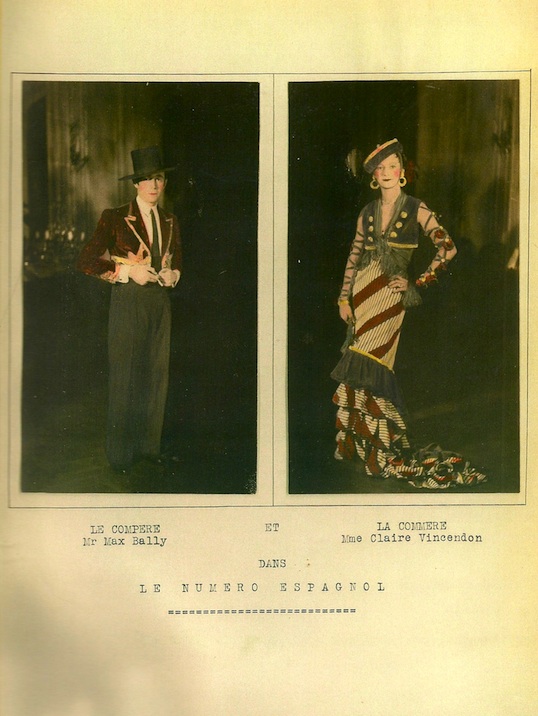
Lawrence Durrell's third wife was Claude Vincendon.  Claude was born in Alexandria, Egypt, in 1925; her mother Claire Vincendon is mentioned in the post of 7 June 2012, Nudism in Alexandria.  Claire enjoyed performing in theatrical entertainments and often designed the costumes and illustrated the programmes. These images are from Alex Cendrillon, a 1934 review which raised funds for Amélé Torah, a Jewish charity in the city.


Claire was involved in Alex Cendrillon, that is the story of Cinderella in Alexandria, presented in the city in April 1934.

Max Bally was the compère of Alex Cendrillon and Claire Vincendon was commère.  Here they are dressed for their roles in a Spanish number.

This backdrop shows the old Ottoman fort atop Kom el Dik, garrisoned by the British, and on the left Pastroudis, a café frequently mentioned in Lawrence Durrell's Alexandria Quartet.   

Women of Alexandria playing the roles of the city's goddesses.

Thursday, 19 July 2012

The Quest for Mary Magdalene

The skull of Mary Magdalene in the crypt at Saint-Maximin-la-Sainte-Baume in Provence

The canonical gospels say little about Mary Magdalene; in fact until the crucifixion she is absent from all of them, except for a brief mention in Luke.  Yet Mary Magdalene is the only figure described in the Bible as a witness to all three defining events of the first Easter, the crucifixion, burial and resurrection of Jesus.  She suffers the death of Jesus at the foot of the cross, and when he rises from the tomb it is to Mary Magdalene that he first appears.  In one of the most moving moments in the New Testament he returns to her, but he is transfigured: 'Touch me not', he says, for he is no longer of this world; and it is Mary Magdalene who understands this, passionately and spiritually, and who carries this message to the disciples.  She is the mediator of the divine mystery, and she has remained a potent and mysterious figure ever since. 

Mary Magdalene is a larger figure than any text; she has taken on a life of her own.  In medieval times she was called 'the light-bearer', recalling her Gnostic epithet, 'inheritor of light' in her search for the truth.  In the manner of a quest, this book follows Mary Magdalene through the centuries, explores how she has been reinterpreted for every age, and examines what she herself reveals about man and the divine.

The Quest for Mary Magdalene by Michael Haag will be published by Profile Books in Britain and HarperCollins in the United States in 2016.

Sunday, 24 June 2012

Lawrence Durrell's Panic Spring: to Alexandria from Corfu

Panic Spring published in the United States by Covici-Friede, first edition 1937
'Charles Norden', the author of Panic Spring, is really Lawrence Durrell.  His first novel, Pied Piper of Lovers, published by Cassell in London, had not sold well; when his new publishers, Faber and Faber, suggested that his second novel, Panic Spring, appear under a pseudonym, Durrell based the name on Van Norden, a Jew in Henry Miller's Tropic of Cancer.  The Faber edition appeared in 1937 and in the United States the novel was published by Covici-Friede in the same year.  Neither sold well and copies are rare; a Faber copy in good condition will set you back many thousands of pounds and a good Covici-Friede edition will cost in the hundreds to a thousand or so; luckily my beaten-up copy cost a few quid.

Alexandrian themes.
Nowadays nobody needs to hunt far and wide nor pay an arm and a leg for a reading copy; both Panic Spring and the earlier Pied Piper of Lovers have recently been published by ELS Editions in Canada.

They make interesting reading.  As the blurb I wrote for the cover of Pied Piper of Lovers says, the book 'introduces in nascent form themes, techniques and characters that Durrell will develop in his later novels. Not least intriguing are his protagonists Walsh and Ruth who will appear again in the streets of Alexandria, Athens and Avignon; their mysterious relationship, which lies at the heart of Durrell's creative urgency, is first explored here in Pied Piper of Lovers'.  And, I should say, it is further explored in Panic Spring, set on a Greek island and written while Durrell was living in Corfu.

Even reading the front flap blurb of the first US edition of Panic Spring is to sense the familiar, what will become fully developed in The Alexandria Quartet - for the island read the city, for Rumanades read Nessim, for his beautiful young mistress read Justine, etc.     

But apart from all that there is the inscription in my copy which has its own story to tell - just as the inscription in my first edition of A Passage to India that I mentioned in an earlier post also had its tale.

My copy of Panic Spring is signed by its owner Harriet Bienstock and dated 6 June 1938.  Later it is stamped with Harriet's ex libris device; she has married Eric Fried and among the pleasures of the loving young couple is to lie before a fire with nothing much on reading books such as Panic Spring
Ex Libris: Nothing much on.
I was curious to know who this Harriet was, and what a nice girl like Harriet was doing reading this book by the unknown Lawrence Durrell.  I discovered one other book recorded as having been owned and stamped by Harriet and Eric; it is in the library at Wake Forest University and is called Unholy Memories of the Holy Land by the English lawyer Horace Samuel and published in London in 1930 by Leonard and Virginia Woolf of the Hogarth Press.  The book is a condemnation of British attitudes and policy towards the Jews during the Palestine mandate. 

A little bit of research revealed that seven months before Harriet read Panic Spring her father Samuel Bienstock died.  Born in Russia, he came to America and founded a drug company and a chain of drug stores; he also served as treasurer of the Jewish Telegraph Agency in the 1920s.  Samuel had two sons and three daughters; one of his daughters, Ida, married Jacob Landau, founder of the Jewish Telegraph Agency for which Ida became a correspondent during the Second World War; while one of his sons was Victor Bienstock, a journalist who worked for the Herald Tribune and then, when Hitler came to power in 1933, joined the Jewish Telegraph Agency for which he too covered the war and later supervised such writers as Theodore H White and the Nobel Prize winner Elie Wiesel.  The Jewish Telegraph Agency became intimately linked with the Jewish Agency, which acted as a kind of autonomous Jewish government for Palestine during the Mandate period, and continues to this day as an international news agency serving Jewish community newspapers and media.

A curiosity - an association of no significance, if there is such a thing - is that the Landaus were close to Albert Einstein, author of the theory of relativity.  In 1933 Einstein became godfather to Ida and Jacob Landau's son, and in the late 1940s, as the Landaus were working for the creation of the State of Israel, they drew on the public support of their friend.

Correspondence between Albert Einstein and Jacob Laundau, Harriet Bienstock's brother in law.
So Durrell wrote Panic Spring while living in Corfu before the war.  Perhaps the exotic location in the Eastern Mediterranean attracted Harriet to his book, though her family also had an interest elsewhere in the Eastern Mediterranean; they were Zionists who were actively involved in promoting Palestine as a Jewish state.  The war drove Durrell from Corfu; fleeing from the advancing Germans as they invaded Greece he escaped to Egypt where he spent most of the rest of the war working for the British Information Office in Alexandria.  There he met Eve Cohen who became his second wife; he also met the Zionist family of the woman who would become his third wife, Claude Vincendon; and when it came to writing what he described as the Einsteinian four-dimensional Alexandria Quartet Durrell would place at its heart a Palestine conspiracy, an attempt to create the State of Israel in the teeth of British policy.  Harriet probably read the Quartet too; she and Durrell had arrived at the same story, but the name Lawrence Durrell would have thrown her off making any connection with Charles Norden, the author of Panic Spring.

Thursday, 7 June 2012

Nudism in Alexandria


'Ah! All will be truly exquisite when Alexandria is converted to nudism.'  So went the song in Alexandria, Egypt, in 1931.

The occasion was the annual review put on at the Alhambra Theatre at the bottom of Rue Safiya Zaghloul in aid of one or another Jewish welfare organisations; in 1931 it was La Société de Bienfaisance Israélite.

A prime mover behind the reviews was Claire Vincendon.  She designed the costumes and the sets and also illustrated the programme shown here.  And she sang and danced in the sketches as well as acted as compère, or rather commère as the programme describes her.

Claire Vincendon's father was Baron Felix de Menasce, a financier and one of the wealthiest men in Egypt.  Her brother was Jean de Menasce who converted from Judaism to Catholicism and became a priest and was in the words of T S Eliot 'my best translator': among other things he did The Waste Land into French.  Claire's half brother George de Menasce was also a financier and a collector of Greek island tapestries, Chinese jade and many other things; some of his collections are now in the Fitzwilliam Museum at Cambridge. The story of the Menasce family is included in Michael Haag's Alexandria: City of Memory.


During the Second World War George gave open house piano concerts in his home in Moharrem Bey attended especially by British servicemen and for which he was awarded an OBE.  Lawrence Durrell also went to the concerts and mixed socially with many people who moved in the same circles as the Menasce family.  But he did not meet Claire's daughter Claude who was only in her late teens.

Claire Vincendon, standing centre, with her husband Jacques at a Finney carnival party in Alexandria. This is a detail of a photograph in Michael Haag's book Vintage Alexandria.
Instead Durrell met Claude Vincendon in Cyprus in 1955 while he was writing Justine, the first volume of The Alexandria Quartet.  She later became his third wife.  By 1960 when Durrell completed the Quartet the mixed communities of Alexandria's cosmopolitan society had left or been thrown out of Egypt.

In the event, nudism never came to Alexandria.

Sunday, 20 May 2012

A Passage from the Norfolk Broads

First edition published 4 June 1924.
In their lifetimes books pass through many hands.  Sometimes it is possible, and also interesting, to trace their passage.  For example some years ago I bought a beaten up hardcover copy of E M Forster's A Passage to India.  I bought it mostly because I needed it for writing Alexandria: City of Memory.  I could have had a copy for less had I bought the paperback, but this happened to be a first edition, so I splurged and paid the £8.

I did what I usually do with books and signed my name inside, though not on the title page this time, instead on the front flyleaf immediately below the signature of a previous owner, L H G Greenwood of Emmanuel College, Cambridge.  I cannot say that his name rang a bell.

Greenwood signed his name in the book sometime during June 1924.
I had read A Passage to India before and now I read it again.  And when I got to the end and read that final passage of broken friendship and loss - '"No, not yet", and the sky said, "No, not there"' - I noticed that Mr Greenwood had been scribbling in my book again. 

A passage on the Norfolk Broads.
'Read on the Broads aloud', Greenwood had written, 'to Frank and Ralph Leavis 29 June-4 July 1924'. So this was F R Leavis and his younger brother Ralph who were spending a week floating about the Norfolk Broads having A Passage of India read to them by F R Leavis' moral tutor (rather than his academic supervisor) who was a classicist, the translator of Aristotle's Nicomachean Ethics and who would later translate the whole of Cicero.

Leavis had got his BA at Cambridge three years before; at the moment of this idyll on the Broads he was completing his PhD and would eventually become one of the foremost literary critics in the English-speaking world.  He admired A Passage to India and would praise it for its 'qualities of intelligence and civilisation'.  This was all the more important as after the Great War, in his view, the world had been going to pot, sinking into degeneracy.  

The Norfolk Broads.
After the further horrors of the Second World War Leavis wrote his most famous and controversial book, The Great Tradition, published in 1948. 'Jane Austen, George Eliot, Henry James, Conrad, and D H Lawrence: the great tradition of the English novel is there'. He was not entirely happy about Lawrence but came round to him more as he wrote the book; as for writers like Dickens, they were not in the tradition, though he did allow that Hard Times was 'a completely serious work of art'.  Moral intensity, in Leavis' view, was the necessary criterion for inclusion in any list of the finest novelists.

Oddly Leavis found the time in The Great Tradition to dismiss a novelist who was almost entirely unknown in 1948, Lawrence Durrell.  Also dismissed for lowering the tone of Western civilisation was Henry Miller, who likewise was unknown except to a few.  It is strange that Leavis bothered to waste his breath, but then he was something of a finely-tuned paranoic and saw coming what others might have missed. 

Doing dirt on life: The Durrell-Miller Letters published by 
Michael Haag and Faber and Faber London 1988.

In certain writers, Leavis wrote, 'a regrettable (if minor) strain of Mr Eliot's influence seems to me to join with that of Joyce', producing 'in so far as we have anything significant, the wrong kind of reaction against liberal idealism. I have in mind writers in whom Mr Eliot has expressed an interest in strongly favourable terms: Djuna Barnes of Nightwood, Henry Miller, Lawrence Durrell of The Black Book. In these writers - at any rate in the last two (and the first seems to me insignificant) - the spirit of what we are offered affects me as being essentially a desire, in Laurentian phrase, to "do dirt" on life'. 

Leavis has it wrong about the dirt.  D H Lawrence was talking about pornography when he wrote of doing dirt.  ‘Pornography is the attempt to insult sex, to do dirt on it', Lawrence wrote in Pornography and Obscenity in 1929.  But neither Durrell nor Miller insult sex or life; quite the opposite.  But that is what Frank Leavis of the Broads has to say, and I mention it more in illustration of the conversation that opens up between present and past when you discover that someone has been scribbling in your book.

Wednesday, 18 April 2012

Alexandrian Women

Two young Slovene women in Alexandria.
In his film Aleksandrinke, Metod Pevec, a Slovenian documentary filmmaker, has told the moving story of the waves of young women from the Goriška region of Slovenia who from the late nineteenth century onwards migrated to Egypt where they worked as nannies, wet nurses, maids and governesses for the better off families of flourishing Alexandria.  The transition from impoverished village to cosmopolitan city could be liberating but the cost could be heartbreaking.  After years of sending money home, sustaining their families, sometimes literally paying for the houses their families lived in, these Slovene women, known in their home valleys as 'Aleksandrinke' - Alexandrians - left behind everything, friends, family, husbands, children, when they discovered that they were unable to return to and endure their former narrow lives.

Many Aleksandrinke spent the whole of their lives in Alexandria or Cairo and are buried there today. The film interviews several women who went to Alexandria, some a hundred years old, and who did after all return to their Slovenian homeland, and it interviews a number of their charges, the young children they nourished and loved in Egypt and who now remember them and love them still, among them Boutros Boutros Ghali.  Some married into cosmopolitan families, Greek, Italian, English, Egyptian; most lived comfortably and some became fabulously wealthy.

The most successful of these women was Josa Finney, who married the English cotton broker Oswald Finney, the richest man in Egypt in the 1930s.  The Finneys gave spectacular carnival balls at their house in Alexandria which became famous in Alexandrian lore and gossip, and served the novelist Lawrence Durrell well when he described the carnival ball in Balthazar, the second volume of his Alexandria Quartet. Michael Haag, who was historical advisor to the film, is also interviewed and talks about Josa and how she inspired one of the greatest scenes in The Alexandria Quartet.

A painted portrait of Josa Finney.
Metod Pevec has won a number of awards for his film Aleksandrinke. For more about Metod and the film, click here.

There is a website for the film in Slovenian and English. And quite apart from the text the website has some good photographs and also a snatch of the film. To go to the website click here.

Unfortunately the film, which has been produced with subtitles, is not yet available on DVD. Meanwhile you will have to make do with the trailer, which can be viewed on the website above or on YouTube. Click here.

Also there is a quite separate website devoted to the phenomenon of the migration of Slovenian women to Alexandria, with photographs, historical background, and so on. Click here.

More on Josa and Oswald Finney, including photographs, can be found in Michael Haag's books Alexandria: City of Memory, Yale University Press, and Vintage Alexandria, The American University in Cairo Press.