Tuesday, 30 October 2018

Alexia Stephanides Mercouri Who Shared the Magic of Corfu with the Durrells

Gerry, Roger and Alexia at the Daffodil Yellow Villa c1936.


Alexia Mercouri, the daughter of Theodore Stephanides, died on Sunday, 28 October, in Athens.  The funeral will be at the Proto Nekrotafeion Athinon on Friday, 2 November, at 3pm.

Alexia was Gerry Durrell's closest friend in Corfu and shared the enchantment of what she called 'another world'. She was a lovely lady and remained a delight throughout her life.

Click on this link for more about Alexia.

Sunday, 23 September 2018

Bloomsbury and Alexandria


Siegfried Sassoon; Leopold Hamilton Myers; Hon. Robert Gathorne-Hardy; Jean de Menasce; James Stephens: a leaf from Lady Ottoline Morrell's photograph album.  The snapshot was probably taken in the garden of her home in Gower Street, London

See how Jean de Menasce has something to do with Lawrence Durrell's Alexandria Quartet.

Tuesday, 28 August 2018

Curate's Egg on His Face: Mahmoud Manzalaoui's Attack on the Veracity of Lawrence Durrell's Alexandria Quartet

Because he was Egyptian and from Alexandria and was an academic, Mahmoud Manazalaoui's attack on the veracity, the honesty,  of Lawrence Durrell's portrait of Alexandria has largely gone unchallenged in the academic world since he wrote his paper Curate's Egg: An Alexandrian Opinion of Durrell's Quartet in 1962.  Shamefully his views are still cited by uncritical academics today.  In fact Manzalaoui's opinion is nothing more than an ignorant rant written by a man who clearly knew next to nothing about the city he claimed as his own.

Click here to read my rejoinder, Egg on His Face, to Manzalaoui (sometimes misspelt Manzaloui).

And click here to read Manzalaoui's original Curate's Egg.

Saturday, 11 August 2018

Alexander the Great Founds Alexandria, 331 BC


Alexander the Great Founds Alexandria, 331 BC
Plutarch, late first century AD
[adapted from: Plutarch, Alexander, Lives, Vol. VII, Loeb Classical Library translated by Bernadotte Perrin Harvard University Press, Cambridge, Massachusetts, 1919.]
- from An Alexandria Anthology
edited by Michael Haag

The Persians overran the Middle East, including Egypt, and twice attempted to invade Greece but were repulsed.  Alexander the Great launched a counterattack, and in 331 BC, after driving the Persians out of Egypt, he founded a new city on the Mediterranean shore. 

After his conquest of Egypt, Alexander wished to found a large and populous Greek city which should bear his name, and by the advice of his architects was on the point of measuring off and enclosing a certain site for it. Then, in the night, as he lay asleep, he saw a wonderful vision. A man with very hoary locks and of a venerable aspect appeared to stand by his side and recite these lines from Homer’s Odyssey –

There is an island in the surging sea, which they call Pharos, lying off Egypt.  It has a harbour with good anchorage, and hence they put out to sea after drawing water.

Accordingly, he rose up at once and went to Pharos, which at that time was still an island, a little above the Canopic mouth of the Nile, but now it has been joined to the mainland by a causeway. And when he saw a site of surpassing natural advantages (for it is a strip of land like enough to a broad isthmus, extending between a great lagoon and a stretch of sea which terminates in a large harbour), he said he saw now that Homer was not only admirable in other ways, but also a very wise architect, and ordered the plan of the city to be drawn in conformity with this site.

There was no chalk at hand, so they took barley-meal and marked out with it on the dark soil a rounded area, to whose inner arc straight lines extended so as to produce the figure of a chlamys, or military cloak, the lines beginning from the skirts (as one may say), and narrowing the breadth of the area uniformly. The king was delighted with the design; but suddenly birds from the river and the lagoon, infinite in number and of every sort and size, settled down upon the place like clouds and devoured every particle of the barley-meal, so that even Alexander was greatly disturbed at the omen. However, the seers exhorted him to be of good cheer, since the city here founded by him would have most abundant and helpful resources and be a nursing mother for men of every nation, and so he ordered those in charge of the work to proceed with it.

Sunday, 29 July 2018

An Artist in Corfu: Sophie Atkinson and Lawrence Durrell

Wheatfields and mountains.

I bought this watercolour the other day of wheatfields with mountains beyond, probably in western Canada. I bought the painting for its associations. It is signed S Atkinson 1926.

Signed S Atkinson 1926.

S Atkinson is Sophie Atkinson who was born in northeast England at Newcastle upon Tyne in 1876.  Both her parents were artists and both her grandfathers were too; Sophie herself went to the Newcastle School of Art and then studied under the renowned portrait painter, watercolourist, early filmmaker and Royal Academician Sir Hubert von Herkomer outside London. 


View across the strait from the Achilleion. 
Early in the twentieth century Sophie went to live in Corfu.  The fruit of her sojourn was An Artist in Corfu, published in 1911, a beautifully produced book illustrated entirely with her own watercolours and a marvellously observed account of life on the island, of that mix of Greek and Venetian culture that makes Corfu so special.

After the First World War Sophie travelled to India and later visited Denmark, Dresden and the Tyrol. In 1924 she went to California, then travelled through western Canada, and eventually settled in Revelstoke, British Columbia.

Sophie painted throughout her life, her subjects still lifes, townscapes, landscapes and Indian villages, and her work was exhibited in Victoria BC, Revelstoke, Calgary, Montreal, and in London, England.  She returned to Britain in 1968 and settled in Edinburgh, Scotland, where she died at the age of ninety-five in 1972.

Sophie Atkinson's book, An Artist in Corfu, made a great impression on Lawrence Durrell who lived on the  island from 1935 to 1939 with his wife Nancy, mostly at Kalami, while his mother Louisa and his siblings Leslie, Margo and Gerry lived here and there, in the Strawberry Pink, the Daffodil Yellow and the Snow White villas. The Second World War put an end to the family's idyll and they returned home to England, but not Larry who with Nancy and their infant child Penelope escaped the advancing Germans by sailing to Egypt.  


Paleocastrizza, a favourite place of Sophie Atkinson and later Lawrence Durrell.

There in Alexandria during the war, with Sophie's book before him, Larry wrote Prospero's Cell, his enchanting and sad tribute to Corfu, the island of his happiness.


Written in Alexandria
during the war and published
in London in 1945.
And because I am writing a biography of Lawrence Durrell, and because I know Corfu and Alexandria, and because I have loved Prospero's Cell and An Artist in Corfu, I now have Sophie Atkinson's watercolour of wheat fields in western Canada hanging on my wall. It is all about associations.


Tuesday, 24 July 2018

Some Summer Postcards


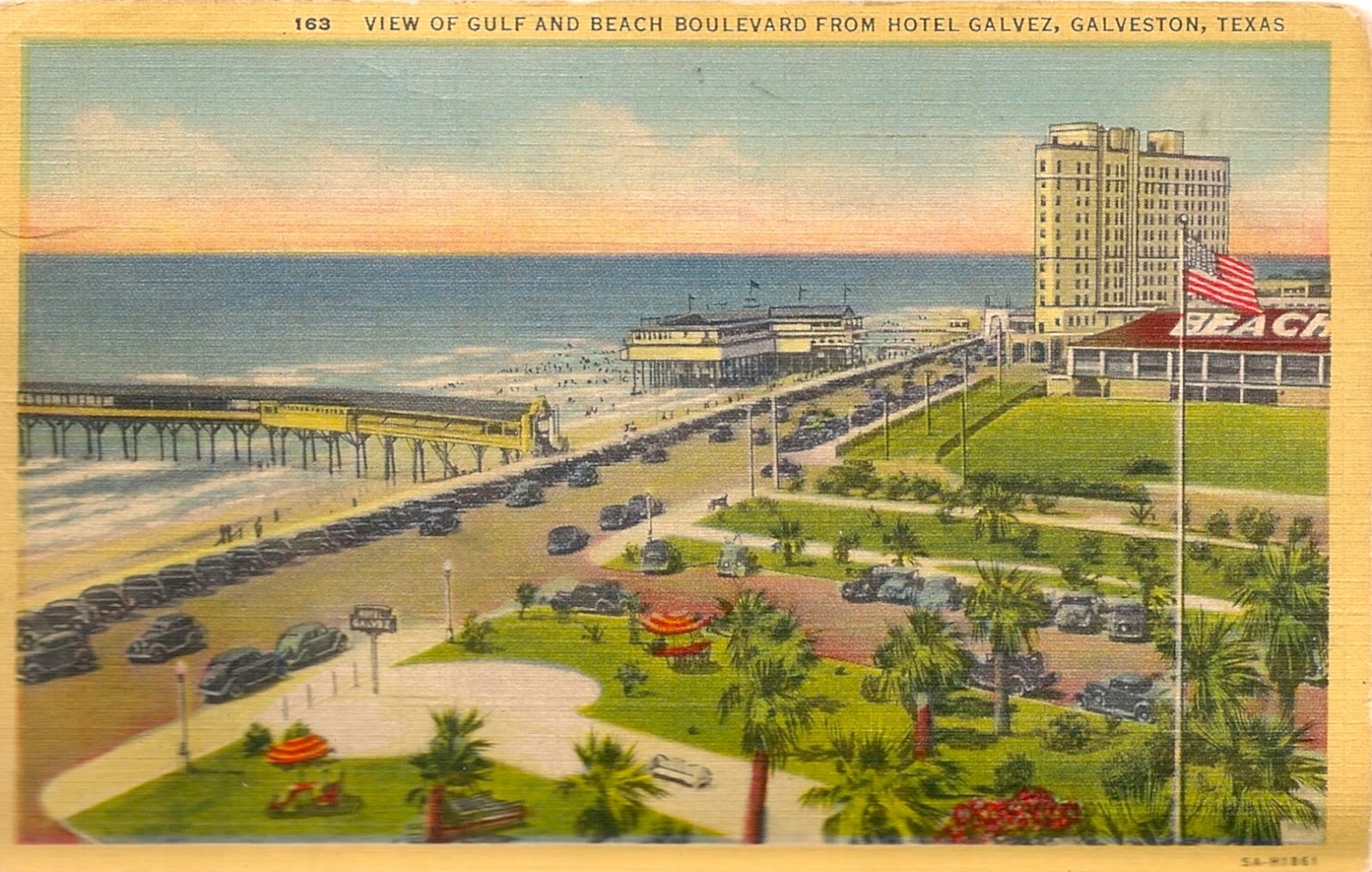
I have received no postcards this summer of people lolling on beaches, no 'wish you were heres'. But I do have postcards of Chicago, the Azores, Alexandria and Galveston.

The card from Chicago was actually printed in Canada and sent from Canada too (Making America Great Again) but told me that I had been spotted by three people as I came of a Chicago restaurant.  'Only it wasn't you! There is some Haag-doppelganger in Chicago who wears socks with sandals'.  Well, that was the giveaway, I suppose; I do not wear socks and sandals at the same time.


This from the island of Pico, which is one big volcano. My brother lives on the volcano's northern flank and believes in geological time, meaning he does not expect the mountain to blow tomorrow. The town in the foreground is Madalena, named for Mary Magdalene.


A friend in Rhode Island sent me this postcard she found while rummaging in a shop in Providence.  I have never seen this view before, which is a rare event; it looks to me like somewhere in the southwest of the city towards the warehouses and the docks, but I really do not know.


A friend who was born in Texas but has not lived there since childhood sent me this old Galveston postcard.  But not as old as the 1900 hurricane which blew all the people all away.

Sunday, 22 July 2018

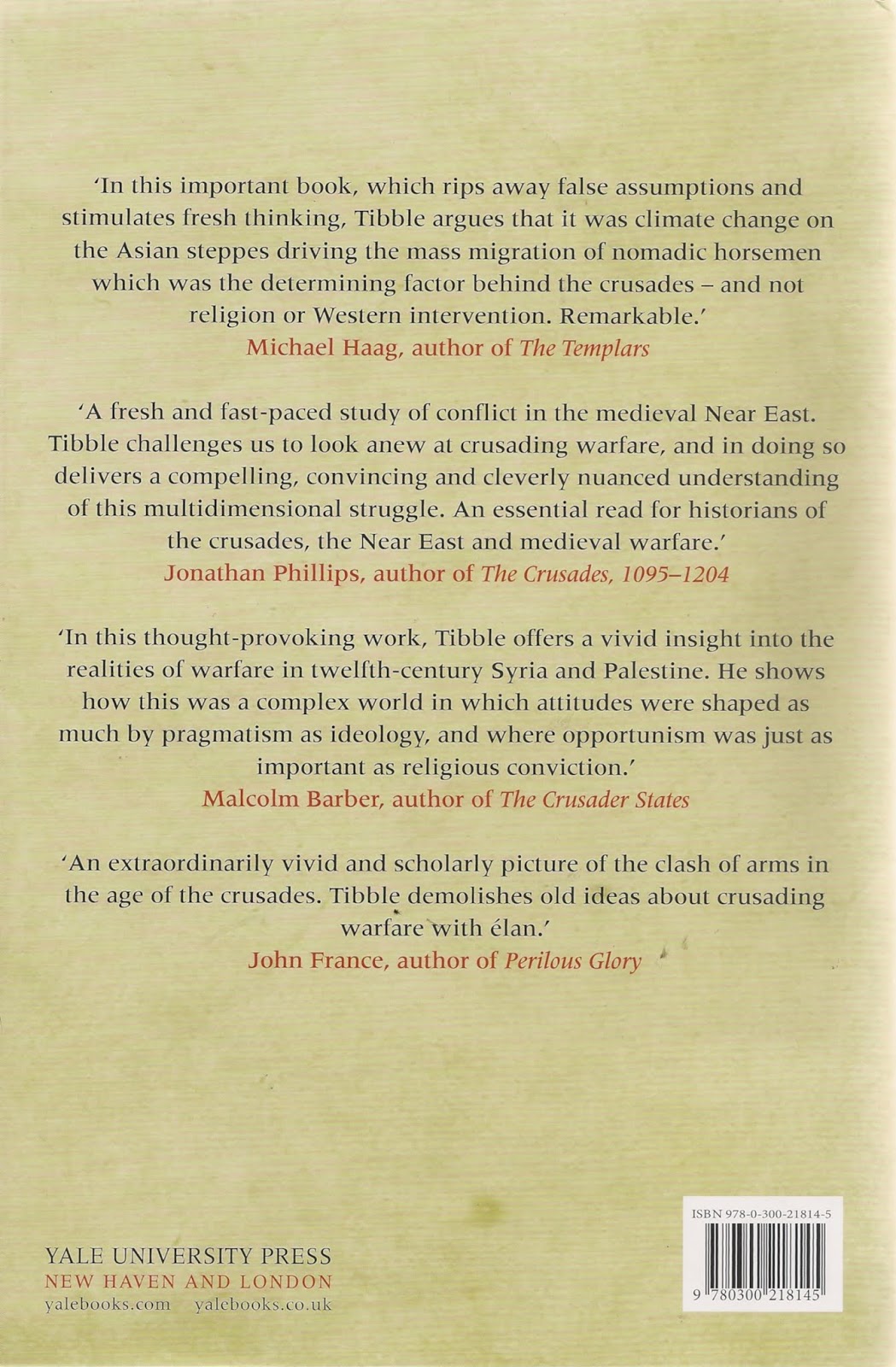
A Remarkable and Refreshing New Book on the Crusades


I mentioned this book before when it was still in page proofs; now I have a bound copy in my hands. 

Published this month by Yale University Press, Steve Tibble's The Crusader Armies is necessary reading for anyone interested in the crusades.


Wednesday, 6 June 2018

E M Forster, Constantine Cavafy and George Valassopoulos in Alexandria


The home of George Valassopoulos at 9 Rue des Fatimites in Alexandria.
When E M Forster was in Alexandria working for the Red Cross during the First World War he came to know George Valassopoulos, a lawyer in the city and a fellow graduate of Kings College, Cambridge.  Forster often called round at Valassopoulos' home at 9 Rue des Fatimites in the Quartier Grec. There Valassopoulos would lead Forster through the poems of their mutual friend Constantine Cavafy in their original Greek and also provided him with elegant and, Cavafy felt, faithful translations. Valassopoulos became their chosen instrument for rendering the poems into English so that Forster could introduce them to the English-speaking world.

Valassopoulos' living room where Forster and Cavafy came as guests.  

Forster first became acquainted with Cavafy's poetry at the home of the poet himself at the Rue Lepsius.  One evening 'a poem is produced - The God Abandons Antony - and I detect some coincidences between its Greek and public-school Greek. Cavafy is amazed. "Oh, but this is good, my dear Forster, this is very good indeed", and he raises his hand, takes over, and leads me through. It was not my knowledge that touched him but my desire to know and to receive'.

Here is the translation of The God Abandons Antony done by Valassopoulos.

When at the hour of midnight
an invisible choir is suddenly heard passing
with exquisite music, with voices --
Do not lament your fortune that at last subsides,
your life's work that has failed, your schemes that have proved illusions.
But like a man prepared, like a brave man,
bid farewell to her, to Alexandria who is departing.
Above all, do not delude yourself, do not say that it is a dream,
that your ear was mistaken.
Do not condescend to such empty hopes.
Like a man for long prepared, like a brave man,
like to the man who was worthy of such a city,
go to the window firmly,
and listen with emotion,
but not with the prayers and complaints of the coward
(Ah! supreme rapture!)
listen to the notes, to the exquisite instruments of the mystic choir,
and bid farewell to her, to Alexandria whom you are losing.

Alexandria was the capital of Cavafy's imagination, 'Queen of the Greek world, / genius of all knowledge, of every art' (The Glory of the Ptolemies), and though the settings of his historical poems range throughout the Greek diaspora, from Italy through Greece to Asia Minor, to Syria and into Persia, ancient Alexandria claims the greatest number. It is 'Alexandria, a godly city' (If Actually Dead), where 'you'll see palaces and monuments that will amaze you' (Exiles), and where 'all are brilliant, / glorious, mighty, benevolent; everything they undertake is full of wisdom' (Caesarion) - yet in each of these poems the theme is failure.

In Alexandrian Kings, for example, published in 1912, the populace turns out in force at the Donations of Alexandria, a great festival arranged by Cleopatra and Antony, where their children were proclaimed kings of Armenia, Media, Parthia, Cilicia, Syria and Phoenicia, and where Cleopatra's eldest, Caesarion, her son and heir by Julius Caesar, was proclaimed King of Kings.  The translation is again by Valassopoulos.


... the day was warm and exquisite,
the sky clear and blue.
the Gymnasium of Alexandria a triumph of art,
the courtiers' apparel magnificent,
Caesarion full of grace and beauty
...
and the Alexandrians ran to see the show
and grew enthusiastic, and applauded
in Greek, in Egyptian, and some in Hebrew,
bewitched with the beautiful spectacle,
though they knew perfectly well how worthless,
what empty words, were these king-makings.

In historical fact the Donations were neither empty words nor meaningless pomp; they were part of Antony's realisable if ambitiously far-reaching design for a new Hellenistic empire based on Alexandria. All the same, we know that things did not work out that way, that Cleopatra and Antony were defeated at Actium three years later in 31 BC, that they took their lives the following year and that the victorious Octavian, addressing the same throng in the same Gymnasium, promised the Alexandrians leniency because their city was so splendid, because Alexander was its founder -- and then had Caesarion put to death ('It is bad to have too many Caesars'). Yet for all their willing delight in spectacle and their pleasure in playing along with dreams, Cavafy's Alexandrians also know: 'It wouldn't have lasted long anyway / years of experience make that clear' -- three thousand years of experience in which Greek cities and kingdoms and empires and dreams have fallen again and again to the ironies of history.

When Forster came to Alexandria he thought the war would bring an end to the civilisation he had known, but he was determined at least to fight against its 'inward death'. Now he found that Cavafy, standing on his balcony, was already surveying a wider wreckage. His exemplar was not Alexander who had founded the city but Antony who bade it farewell; fallen to Rome, fallen to the Arabs, Cavafy saw failure and loss as the central Alexandrian experience, his native city the capital of the repeatedly wounded world of Hellenism, which as he spoke could seem to connote the entire civilisation of humankind. Like the populace in Alexandrian Kings, he snatched what he could from the moment.

These photographs of Valassopoulos' house were taken after his death in 1972.

The complete translations of Cavafy's poetry by George Valassopoulos are found in The Forster-Cavafy Letters, edited by Peter Jeffreys, published by The American University in Cairo Press and available directly from them or from online outlets like Amazon.

Soon after these photographs were taken the house was pulled down.

Tuesday, 29 May 2018

The Durrells in Corfu and in Bournemouth and Beyond

Keeley Hawes who plays Louisa Durrell and The Durrells scriptwriter Simon Nye.


ITV have announced that they have commissioned a fourth series of The Durrells to be broadcast in Britain in spring 2019, while PBS says it will be shown in America that autumn (where it is called The Durrells in Corfu).

Keeley Hawes and Simon Nye.


And scriptwriter Simon Nye discusses the longer term future, suggesting the story of the Durrells might well run to five series before the family leaves Corfu, after which the action would shift to Bournemouth and maybe look in on Larry in Egypt.

Keeley Hawes, scriptwriter Simon Nye, and executive producers Sally Woodward Gentle and Lee Morris at the British Film Institute and Radio Times TV Festival, London, 8 April 2017.

Sunday, 20 May 2018

Lawrence Durrell's Later Poetry Newly Collected


The Fruitful Discontent of the Word, to be published on 25 May, for the first time brings together Lawrence Durrell's later poetry, the poems he embedded in his novel cycle The Avignon Quintet set in Provence and Egypt, his writings on place such as Sicilian Carousel and Caesar's Vast Ghost, and also poems found in Spirit of Place, a collection of his letters, articles and short pieces.

Click on the image below to learn more and how to order.

Tuesday, 15 May 2018

Orson Welles' Underpants

Orson Welles in 1955.


My aunt Ann Rogers was Orson Welles' private secretary and all-round fixer from 1955 until 1979.  

An extremely discreet woman, she worked quietly and invisibly behind the scenes (though sometimes telling me good stories about OW's adventures), proud to devote herself to his genius.

Orson Welles in 1983.


So I was a bit surprised when someone drew my attention to her name in print in this newspaper article which highlights a new book about Welles by Dorian Bond. My aunt, whose methods Bond describes as like 'working for the SOE, sending agents off on deadly missions', has been briefly exposed in the pages of the Daily Mail.

Which has reminded me of one of her most covert operations, forwarding underpants to Orson Welles.  She wrapped them in a large parcel and gave it to my father who was passing through London on his way to California where Welles was living at the time.  

But my father (my aunt's younger brother) was an unreliable agent.  He could not resist peeping inside.  And kept a pair of OW's underpants as a souvenir.  Afterwards my brother tried them on with the result you see below.

My brother Anton, left, and his friend Tom, trying on Orson Welles' underpants in 1983.

Friday, 4 May 2018

The Crusader Armies


Before anyone reads or writes another book about the Crusades they should read Steve Tibble's The Crusader Armies.

I was asked by Yale University Press to read the book in proof and offer comments in advance of publication this coming July.  I found it exciting and refreshing.  

For one thing it overturns the tired old prejudices that the West was the aggressor, that events were driven by religious fanatics, and draws a broader, more profound and complex picture of events - but always readable.  

Tibble presents the latest scholarly and archaeological research, much of which has not yet entered the public consciousness (nor a good deal of academic thinking) , to make his case that climate change on the Asian steppes drove the mass migration of nomadic horsemen who created havoc among the settled peoples of the Middle East, Christian and Muslim alike.  This and not religion nor Western intervention was the determining factor behind the crusades.

It affected strategy, tactics and the composition of armies - with often Muslims and Christians fighting as allies or even within one another's ranks.  

It also affected the outcome.  Ultimate victory went to those who could draw on the greatest reserves of nomads, which favoured the Muslims in the East who had Turkic nomads moving into their hinterlands.  But that was not the case in the West where Portugal, Spain and France were saved for Europe.

Wednesday, 25 April 2018

Lawrence Durrell's First School in England


Lawrence Durrell was born in India and came to England when he was ten.  From 1924 to 1926, when Durrell was eleven to thirteen years old, he was a student at St Olave's and St Saviour's Grammar School in Tooley Street on the south bank of the Thames near Tower Bridge in Bermondsey, London.  The school has since moved to Orpington in Kent, but the building Larry knew remains - transfigured into an Indian-run luxury boutique hotel.


The original dining hall of the school is now the hotel restaurant.

To get a sense of the neighbourhood you can click on Google Street View.  The new bulbous London Mayor's building is straight ahead beyond the school.  Turn left for the Shard, the tallest building in Europe.  Turn right and then left for Tower Bridge.

The Lalit is an Indian-run hotel. The elephant was not here in Durrell's time but it would have been a welcome sight: Durrell was born in India.


After leaving St Olave's Durrell continued his education at St Edmund's in Canterbury.

Monday, 9 April 2018

Sham el Nessim

Families fill city parks at Sham el Nessim.

Today is Sham el Nessim, an ancient spring festival celebrated in Egypt since pharaonic times.  Falling on the Monday after Coptic and Greek Orthodox Easter but rooted in the religion of the Old Kingdom, Sham el Nessim is a picturesque national holiday when the entire population, Christian and Muslim and until recently Jews too, goes out into the fields or to the Nile to eat in the open air and greet the zephyrs of spring.                                                                           

A young girl at the spring flower show at Ismailia.

Edward William Lane, in his Manners and Customs of the Modern Egyptians, described the Sham el Nessim he knew in  the 1830s.  

'A custom termed "Shemm en-Neseem" (or the Smelling of the Zephyr) is observed on the first day of the Khamaseen. Early in the morning of this day, many persons, especially women, break an onion, and smell it ; and in the course of the forenoon, many of the citizens of Cairo ride or walk a little way into the country, or go in boats, generally northwards, to take the air, or, as they term it, smell the air, which, on that day, they believe to have a wonderfully beneficial effect. The greater number dine in the country, or on the river. This year (1834), they were treated with a violent hot wind, accompanied by clouds of dust, instead of the neseem ; but considerable numbers, notwithstanding, went out to "smell " it.  The 'Ulama have their "shemm en-neseem " at a fixed period of the solar year; the first three days of the spring-quarter, corresponding with the Persian "Now-r6z," called by the Arabs "N6rooz."'

Lawrence Durrell used Lane's book to provide himself with background for his Alexandria Quartet in which the two Hosnani brothers are called Nessim and Narouz.

Jewish families of Alexandria celebrate Sham el Nessim
on the beach in 1912.

Rose Tuby, the future wife of Baron Edmund de Menasce,
was a friend of Constantine Cavafy
and later of Lawrence Durrell.


[The sepia photographs in this post are from Michael Haag's Vintage Alexandria published by The American University in Cairo Press.  The colour photographs are from Egypt Today magazine.]

Wednesday, 4 April 2018

A Somewhat Belated Review of Michael Haag's The Durrells of Corfu

An old postcard from Corfu.

A somewhat belated review of The Durrells of Corfu - and a particularly interesting one for its remarks on Kathryn Hughes' strange review a year ago in The Guardian.

Monday, 2 April 2018

Henry Miller in Full Frontal Meeting with the Durrells

Henry Miller as depicted in London in The Durrells.

In episode three of the third series of The Durrells, broadcast last night, Louisa and Larry go to London where they meet Henry Miller. It is true that Louisa went to London but with Gerry and Margo to see about a hormone problem that was making Margo fat.  Gerry tells the story in My Family and Other Animals.

That was in 1937, and no sooner had Louisa, Margo and Gerry returned than Larry and his wife Nancy left Corfu for Paris where they met Henry Miller.  But there is no account if him being naked at the time.

But Miller and Louisa never met in London.
Miller naked in London is an invention of Simon Nye, The Durrells' scriptwriter.  Miller never lived there, naked or otherwise. Instead he lived in Paris throughout the 1930s where he wrote and published Tropic of Cancer, his ebullient and erotic depiction of underground life in the city.  The  novel was banned for obscenity in Britain and America, but Larry managed to get hold of a copy in Corfu and shot off an admiring and enthusiastic letter to Miller who replied 'Your letter is so vivid, so keen, that I am curious to know if you are not a writer yourself'. This exchange, in 1935, marked the beginning of a lifetime friendship between the two.

Louisa had left Corfu by the time Miller, shown here
in a future episode, arrived there.
In 1939, just before the outbreak of the war, Miller did come to Corfu where he joined Nancy and Larry in their habit of stripping off.  'I hadn't been in the water for twenty years', said Miller, in contrast to Larry and his wife who were 'like a couple of dolphins'.  At the nearby shrine of St Arsenius overlooking the crystal blue Ionian, 'We baptised ourselves in the raw'.  By that time Louisa had returned to England; she never did meet Henry Miller.

First edition Colt Press 1941.
Miller goes unmentioned in Gerry's Corfu books and in Larry's Prospero's Cell.  But you will find something about his time in Corfu in The Colossus of Maroussi, the best book Miller ever wrote, which was published in 1941 after his return to America from Greece.

And then there is Margo's recollection of Henry as reported in The Durrells of Corfu.  This was after the family had left the island but Margo had impulsively returned from England to face the approaching war shoulder to shoulder with her Corfiot friends.  Henry was also there, enjoying the last moments of peace. 'A wonderful period of solitude set in', Miller recalled. 'It was the first time in my life that I was truly alone.’
Not quite alone, according to Margo. ‘Lawrence asked me to look after him, and he said, “Don’t let anybody swindle him”, which I thought was a typical Lawrence remark at that point. I did look after Henry, and I found him very charming. He did use a lot of bad language, but then, you know, I was used to that language. He just was very genial. He came swimming, and was absolutely like a grandfather. Lawrence said I was safe because I was one of the family.’