


Monday, 24 December 2018
Saturday, 15 December 2018
The Durrells in Poland

My book The Durrells of Corfu has now been translated into Polish as Durrellowie z Korfu and published in Warsaw by Noir sur Blanc.

Friday, 16 November 2018
The Durrells in Estonia
 |
| Durrellid Korful |
The Durrells of Corfu has now been published as Durrellid Korful in Estonia by Eesti Raamat.
Can Latvia and Lithuania be far behind?
See also the original English-language edition.
Tuesday, 13 November 2018
The Hotel Cecil in London and Alexandria

About London's Cecil from today's Telegraph:
'One of the best contemporary descriptions can be found in Nathaniel Newnham-Davis’s 1914 book, The Gourmet’s Guide to London.
'He explains how the bustling courtyard at the Hotel Cecil’s entrance, known as “The Beach”, was a popular hangout for American guests who preferred it to the gilded parlours within. “The most American spot in London” was filled with cane chairs, piles of luggage, a newspaper stall, and “in the summer-time pretty girls sunning themselves and waiters hurrying to and fro with cold drinks and long straws”.'
See here
for more of this article in The Telegraph.
And see here
for the Cecil in Alexandria.
Tuesday, 30 October 2018
Alexia Stephanides Mercouri Who Shared the Magic of Corfu with the Durrells
 |
| Gerry, Roger and Alexia at the Daffodil Yellow Villa c1936. |
Alexia Mercouri, the daughter of Theodore Stephanides, died on Sunday, 28 October, in Athens. The funeral will be at the Proto Nekrotafeion Athinon on Friday, 2 November, at 3pm.
Alexia was Gerry Durrell's closest friend in Corfu and shared the enchantment of what she called 'another world'. She was a lovely lady and remained a delight throughout her life.
Click on this link for more about Alexia.
Sunday, 23 September 2018
Bloomsbury and Alexandria

Siegfried Sassoon; Leopold Hamilton Myers;
Hon. Robert Gathorne-Hardy; Jean de Menasce; James Stephens: a leaf from Lady
Ottoline Morrell's photograph album. The
snapshot was probably taken in the garden of her home in Gower Street, London
See how Jean de Menasce has something to do
with Lawrence Durrell's Alexandria Quartet.
Tuesday, 28 August 2018
Curate's Egg on His Face: Mahmoud Manzalaoui's Attack on the Veracity of Lawrence Durrell's Alexandria Quartet
Because he was Egyptian and from Alexandria and was an academic, Mahmoud Manazalaoui's attack on the veracity, the honesty, of Lawrence Durrell's portrait of Alexandria has largely gone unchallenged in the academic world since he wrote his paper Curate's Egg: An Alexandrian Opinion of Durrell's Quartet in 1962. Shamefully his views are still cited by uncritical academics today. In fact Manzalaoui's opinion is nothing more than an ignorant rant written by a man who clearly knew next to nothing about the city he claimed as his own.
Click here to read my rejoinder, Egg on His Face, to Manzalaoui (sometimes misspelt Manzaloui).
And click here to read Manzalaoui's original Curate's Egg.
Click here to read my rejoinder, Egg on His Face, to Manzalaoui (sometimes misspelt Manzaloui).
And click here to read Manzalaoui's original Curate's Egg.
Saturday, 11 August 2018
Alexander the Great Founds Alexandria, 331 BC
Alexander the Great Founds Alexandria, 331 BC
Plutarch, late first century AD
[adapted from: Plutarch, Alexander, Lives, Vol. VII, Loeb Classical Library translated by Bernadotte Perrin Harvard University Press, Cambridge, Massachusetts, 1919.]
- from An Alexandria Anthology
edited by Michael Haag- from An Alexandria Anthology
The Persians overran the Middle East, including Egypt, and twice attempted to invade Greece but were repulsed. Alexander the Great launched a counterattack, and in 331 BC, after driving the Persians out of Egypt, he founded a new city on the Mediterranean shore.
After his conquest of Egypt, Alexander wished to found a large and populous Greek city which should bear his name, and by the advice of his architects was on the point of measuring off and enclosing a certain site for it. Then, in the night, as he lay asleep, he saw a wonderful vision. A man with very hoary locks and of a venerable aspect appeared to stand by his side and recite these lines from Homer’s Odyssey –
There is an island in the surging sea, which they call Pharos, lying off Egypt. It has a harbour with good anchorage, and hence they put out to sea after drawing water.
Accordingly, he rose up at once and went to Pharos, which at that time was still an island, a little above the Canopic mouth of the Nile, but now it has been joined to the mainland by a causeway. And when he saw a site of surpassing natural advantages (for it is a strip of land like enough to a broad isthmus, extending between a great lagoon and a stretch of sea which terminates in a large harbour), he said he saw now that Homer was not only admirable in other ways, but also a very wise architect, and ordered the plan of the city to be drawn in conformity with this site.
There was no chalk at hand, so they took barley-meal and marked out with it on the dark soil a rounded area, to whose inner arc straight lines extended so as to produce the figure of a chlamys, or military cloak, the lines beginning from the skirts (as one may say), and narrowing the breadth of the area uniformly. The king was delighted with the design; but suddenly birds from the river and the lagoon, infinite in number and of every sort and size, settled down upon the place like clouds and devoured every particle of the barley-meal, so that even Alexander was greatly disturbed at the omen. However, the seers exhorted him to be of good cheer, since the city here founded by him would have most abundant and helpful resources and be a nursing mother for men of every nation, and so he ordered those in charge of the work to proceed with it.
Sunday, 29 July 2018
An Artist in Corfu: Sophie Atkinson and Lawrence Durrell
 |
| Wheatfields and mountains. |
I bought this watercolour the other day of wheatfields with mountains beyond, probably in western Canada. I bought the painting for its associations. It is signed S Atkinson 1926.
 |
| Signed S Atkinson 1926. |
S Atkinson is Sophie Atkinson who was born in northeast England at Newcastle upon Tyne in 1876. Both her parents were artists and both her grandfathers were too; Sophie herself went to the Newcastle School of Art and then studied under the renowned portrait painter, watercolourist, early filmmaker and Royal Academician Sir Hubert von Herkomer outside London.
 |
| View across the strait from the Achilleion. |
After the First World War Sophie travelled to India and later visited Denmark, Dresden and the Tyrol. In 1924 she went to California, then travelled through western Canada, and eventually settled in Revelstoke, British Columbia.
Sophie painted throughout her life, her subjects still lifes, townscapes, landscapes and Indian villages, and her work was exhibited in Victoria BC, Revelstoke, Calgary, Montreal, and in London, England. She returned to Britain in 1968 and settled in Edinburgh, Scotland, where she died at the age of ninety-five in 1972.
 Sophie Atkinson's book, An Artist in Corfu, made a great impression on Lawrence Durrell who lived on the island from 1935 to 1939 with his wife Nancy, mostly at Kalami, while his mother Louisa and his siblings Leslie, Margo and Gerry lived here and there, in the Strawberry Pink, the Daffodil Yellow and the Snow White villas. The Second World War put an end to the family's idyll and they returned home to England, but not Larry who with Nancy and their infant child Penelope escaped the advancing Germans by sailing to Egypt.
 |
| Paleocastrizza, a favourite place of Sophie Atkinson and later Lawrence Durrell. |
There in Alexandria during the war, with Sophie's book before him, Larry wrote Prospero's Cell, his enchanting and sad tribute to Corfu, the island of his happiness.
 |
| Written in Alexandria during the war and published in London in 1945. |
Tuesday, 24 July 2018
Some Summer Postcards

I have received no postcards this summer of people lolling on beaches, no 'wish you were heres'. But I do have postcards of Chicago, the Azores, Alexandria and Galveston.
The card from Chicago was actually printed in Canada and sent from Canada too (Making America Great Again) but told me that I had been spotted by three people as I came of a Chicago restaurant. 'Only it wasn't you! There is some Haag-doppelganger in Chicago who wears socks with sandals'. Well, that was the giveaway, I suppose; I do not wear socks and sandals at the same time.

This from the island of Pico, which is one big volcano. My brother lives on the volcano's northern flank and believes in geological time, meaning he does not expect the mountain to blow tomorrow. The town in the foreground is Madalena, named for Mary Magdalene.

A friend in Rhode Island sent me this postcard she found while rummaging in a shop in Providence. I have never seen this view before, which is a rare event; it looks to me like somewhere in the southwest of the city towards the warehouses and the docks, but I really do not know.
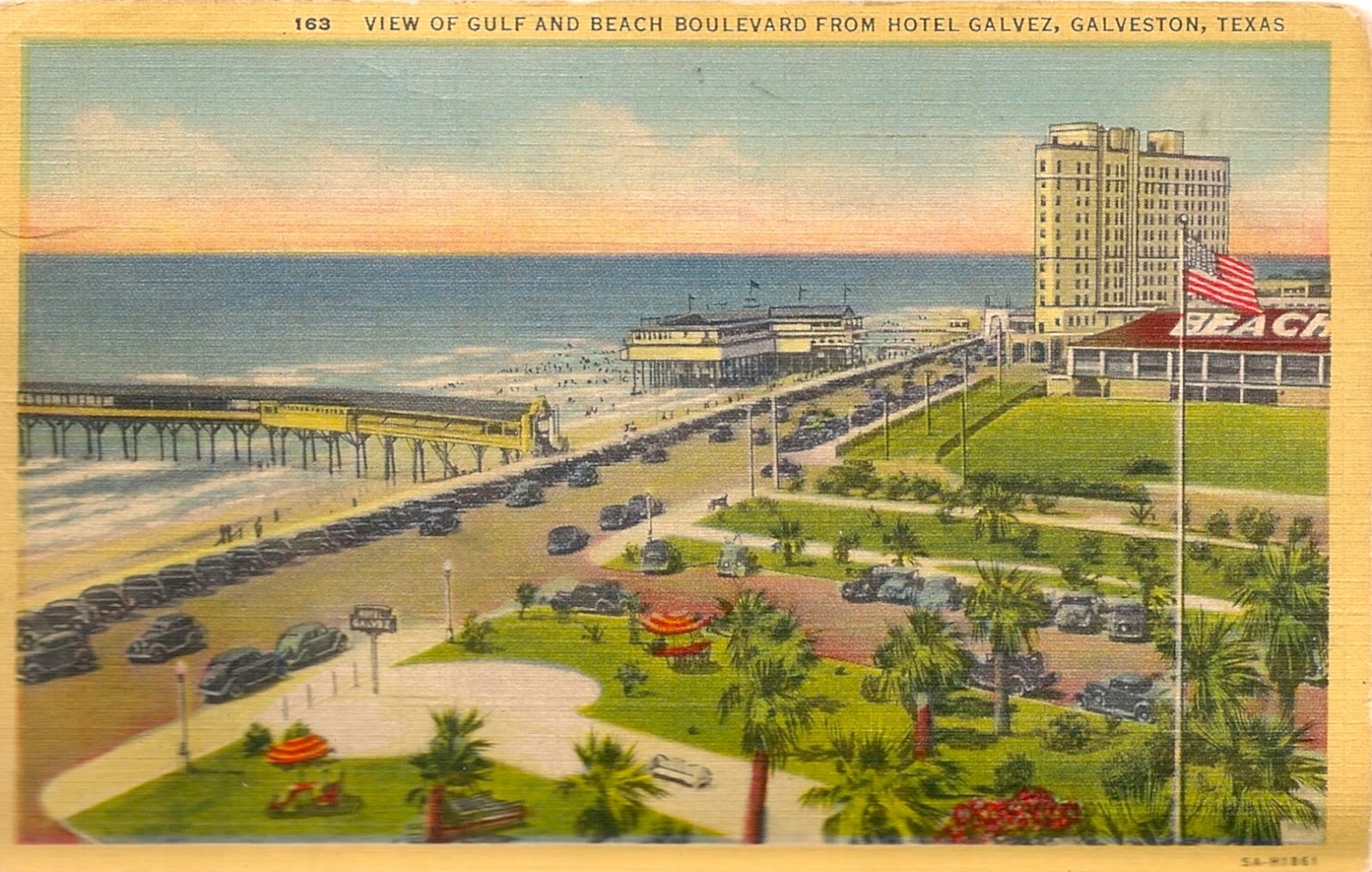
A friend who was born in Texas but has not lived there since childhood sent me this old Galveston postcard. But not as old as the 1900 hurricane which blew all the people all away.
Sunday, 22 July 2018
A Remarkable and Refreshing New Book on the Crusades

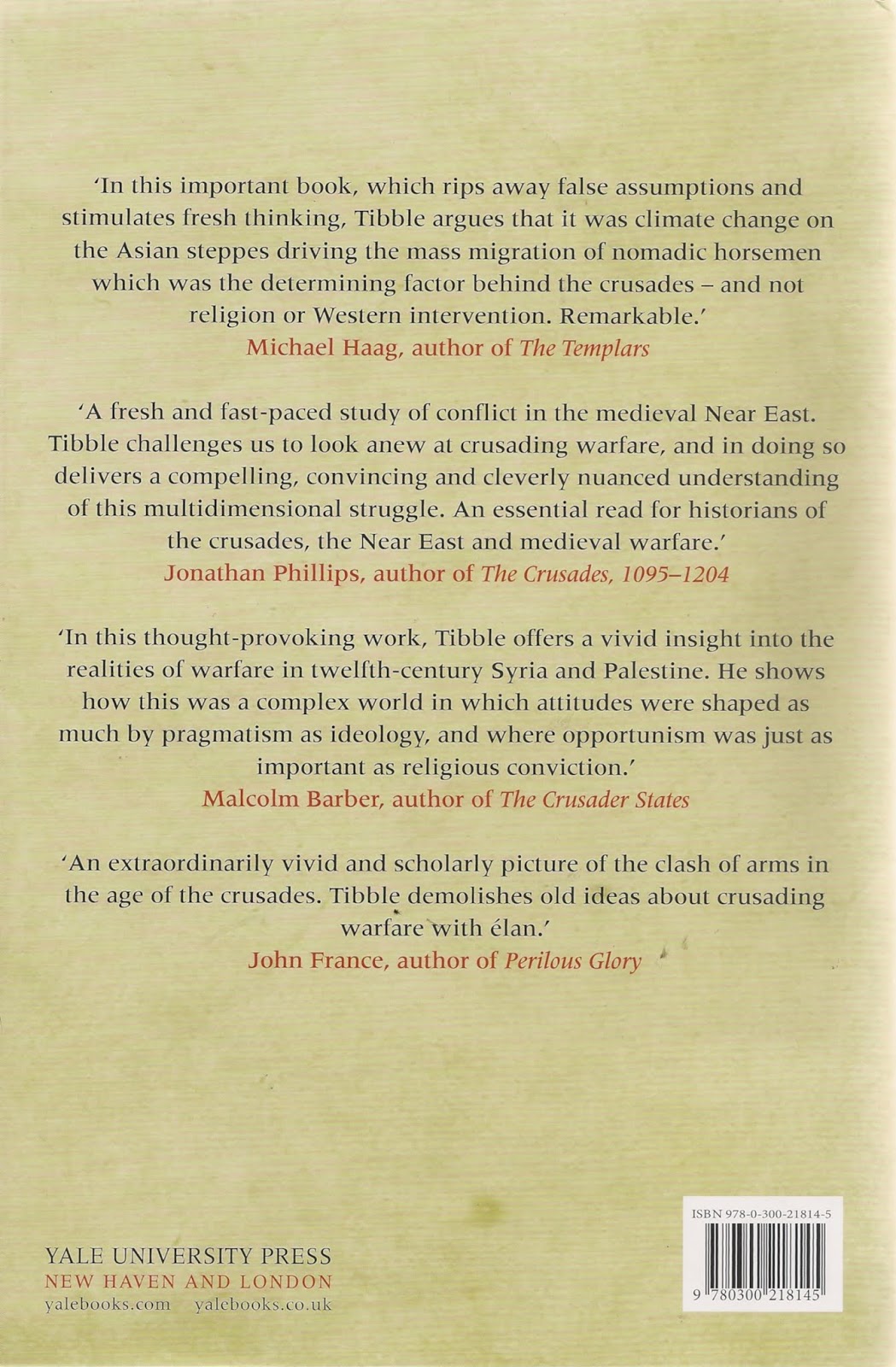
I mentioned this book before when it was still in page proofs; now I have a bound copy in my hands.
Published this month by Yale University Press, Steve Tibble's The Crusader Armies is necessary reading for anyone interested in the crusades.
Wednesday, 6 June 2018
E M Forster, Constantine Cavafy and George Valassopoulos in Alexandria
 |
| The home of George Valassopoulos at 9 Rue des Fatimites in Alexandria. |
When E M Forster was in Alexandria working
for the Red Cross during the First World War he came to know George
Valassopoulos, a lawyer in the city and a fellow graduate of Kings College,
Cambridge. Forster often called round at
Valassopoulos' home at 9 Rue des Fatimites in the Quartier Grec. There
Valassopoulos would lead Forster through the poems of their mutual friend
Constantine Cavafy in their original Greek and also provided him with elegant
and, Cavafy felt, faithful translations. Valassopoulos became their chosen
instrument for rendering the poems into English so that Forster could introduce
them to the English-speaking world.
 |
| Valassopoulos' living room where Forster and Cavafy came as guests. |
Forster first became acquainted with Cavafy's poetry at the home of the poet himself at the Rue Lepsius. One evening 'a poem is produced - The God Abandons Antony - and I detect some coincidences between its Greek and public-school Greek. Cavafy is amazed. "Oh, but this is good, my dear Forster, this is very good indeed", and he raises his hand, takes over, and leads me through. It was not my knowledge that touched him but my desire to know and to receive'.
Here is the translation of The God Abandons Antony done by Valassopoulos.
When at the hour of midnight
an invisible choir is suddenly heard
passing
with exquisite music, with voices --
Do not lament your fortune that at last
subsides,
your life's work that has failed, your
schemes that have proved illusions.
But like a man prepared, like a brave
man,
bid farewell to her, to Alexandria who is
departing.
Above all, do not delude yourself, do not
say that it is a dream,
that your ear was mistaken.
Do not condescend to such empty hopes.
Like a man for long prepared, like a
brave man,
like to the man who was worthy of such a
city,
go to the window firmly,
and listen with emotion,
but not with the prayers and complaints
of the coward
(Ah! supreme rapture!)
listen to the notes, to the exquisite
instruments of the mystic choir,
and bid farewell to her, to Alexandria
whom you are losing.
Alexandria was the capital of Cavafy's
imagination, 'Queen of the Greek world, / genius of all knowledge, of every
art' (The Glory of the Ptolemies),
and though the settings of his historical poems range throughout the Greek
diaspora, from Italy through Greece to Asia Minor, to Syria and into Persia,
ancient Alexandria claims the greatest number. It is 'Alexandria, a godly city'
(If Actually Dead), where 'you'll see
palaces and monuments that will amaze you' (Exiles),
and where 'all are brilliant, / glorious, mighty, benevolent; everything they
undertake is full of wisdom' (Caesarion)
- yet in each of these poems the theme is failure.
In Alexandrian Kings, for example, published in 1912, the populace turns out in force at the Donations of Alexandria, a great festival arranged by Cleopatra and Antony, where their children were proclaimed kings of Armenia, Media, Parthia, Cilicia, Syria and Phoenicia, and where Cleopatra's eldest, Caesarion, her son and heir by Julius Caesar, was proclaimed King of Kings. The translation is again by Valassopoulos.
... the day was warm and exquisite,
the sky clear and blue.
the Gymnasium of Alexandria a triumph of
art,
the courtiers' apparel magnificent,
Caesarion full of grace and beauty
...
and the Alexandrians ran to see the show
and grew enthusiastic, and applauded
in Greek, in Egyptian, and some in
Hebrew,
bewitched with the beautiful spectacle,
though they knew perfectly well how
worthless,
what empty words, were these
king-makings.
In historical fact the Donations were
neither empty words nor meaningless pomp; they were part of Antony's realisable
if ambitiously far-reaching design for a new Hellenistic empire based on
Alexandria. All the same, we know that things did not work out that way, that
Cleopatra and Antony were defeated at Actium three years later in 31 BC, that
they took their lives the following year and that the victorious Octavian,
addressing the same throng in the same Gymnasium, promised the Alexandrians
leniency because their city was so splendid, because Alexander was its founder
-- and then had Caesarion put to death ('It is bad to have too many
Caesars'). Yet for all their willing delight in spectacle and their
pleasure in playing along with dreams, Cavafy's Alexandrians also know: 'It wouldn't have lasted long
anyway / years of experience make that clear' -- three thousand years of
experience in which Greek cities and kingdoms and empires and dreams have
fallen again and again to the ironies of history.
When Forster came to Alexandria he
thought the war would bring an end to the civilisation he had known, but he was
determined at least to fight against its 'inward death'. Now he found that
Cavafy, standing on his balcony, was already surveying a wider wreckage. His
exemplar was not Alexander who had founded the city but Antony who bade it
farewell; fallen to Rome, fallen to the Arabs, Cavafy saw failure and loss as
the central Alexandrian experience, his native city the capital of the
repeatedly wounded world of Hellenism, which as he spoke could seem to connote
the entire civilisation of humankind. Like the populace in Alexandrian Kings, he snatched what he could from the moment.
 |
| These photographs of Valassopoulos' house were taken after his death in 1972. |
The complete translations of Cavafy's poetry by George Valassopoulos are found in The Forster-Cavafy Letters, edited by Peter Jeffreys, published by The American University in Cairo Press and available directly from them or from online outlets like Amazon.
 |
| Soon after these photographs were taken the house was pulled down. |
Subscribe to:
Posts (Atom)


